AliasCrypt Home

Category

Portfolio Management

21 articles

Crypto Estate Planning Done Wrong: The Legal Gaps That Will Leave Your Heirs With Nothing

Crypto Estate Planning Done Wrong: The Legal Gaps That Will Leave Your Heirs With Nothing

The majority of US cryptocurrency holders who have made any estate planning provision for their digital assets have done so in ways that are either legally unenforceable, technically unworkable, or both. From private key escrow arrangements that fail under state law to wills that expose seed phrases to public probate records, the gap between perceived and actual preparedness is substantial. A genuinely effective crypto estate plan requires addressing a set of legal and technical challenges that

The Invisible Tax: Mapping the Hidden Fee Layers That Are Quietly Draining Your Crypto Returns

The Invisible Tax: Mapping the Hidden Fee Layers That Are Quietly Draining Your Crypto Returns

Most US crypto investors focus on exchange trading fees and largely ignore the compounding cost structures embedded in staking pools, cross-chain bridges, and decentralized trading protocols. These charges—often expressed in fractions of a percent or buried in smart contract mechanics—aggregate into a meaningful drag on annual returns that rarely appears in any single statement. A clear-eyed accounting of true net yield requires mapping every layer before capital is committed.

Volume as Theater: How Exchanges Stage the Illusion of Deep Liquidity

Volume as Theater: How Exchanges Stage the Illusion of Deep Liquidity

High trading volume on a cryptocurrency exchange looks like a green light for confident execution, but a growing body of evidence suggests many of those numbers are constructed rather than real. Wash trading, circular flows, and self-reported metrics have created a landscape where vanity statistics masquerade as reliable liquidity signals. US investors who commit capital based on headline volume figures alone may be walking into a trap built entirely of data theater.

The Clock Doesn't Lie — But Whose Clock Are We Trusting? Timestamp Conflicts and the IRS

The Clock Doesn't Lie — But Whose Clock Are We Trusting? Timestamp Conflicts and the IRS

US tax law governing cryptocurrency transactions is built on the premise that each trade has a precise, verifiable timestamp — but the systems generating those timestamps frequently disagree with one another. Exchange servers, blockchain confirmation records, and taxpayers' local time zones can each produce different times for the same event, and the IRS is beginning to notice the gaps. Investors who cannot reconcile these discrepancies with documented evidence face growing audit exposure as fed

Dormant but Not Invisible: The Tax Obligations Hidden Inside Passive Crypto Holdings

Dormant but Not Invisible: The Tax Obligations Hidden Inside Passive Crypto Holdings

Millions of US crypto investors believe that holding assets without actively trading them insulates them from complex tax obligations. The IRS sees it differently. From staking rewards and airdrops to protocol upgrades and appreciation-triggered events, passive holdings generate taxable consequences that catch unprepared investors off guard every filing season. This examination breaks down the gap between investor intent and federal tax interpretation—and identifies practical strategies for mana

One Platform, One Point of Failure: The Growing Case Against Single-Exchange Concentration

One Platform, One Point of Failure: The Growing Case Against Single-Exchange Concentration

Concentrating your entire crypto portfolio on a single exchange offers undeniable convenience, but recent history suggests that convenience carries a steep and often hidden price. From sudden regulatory shutdowns to liquidity crises and operational failures, the case for platform diversification has never been more compelling. This investigation examines why single-exchange reliance is quietly becoming one of the most underappreciated risks in retail crypto investing.

The Hidden Price of Fragmentation: What Identity Segmentation Is Really Costing US Crypto Traders

The Hidden Price of Fragmentation: What Identity Segmentation Is Really Costing US Crypto Traders

Many US crypto traders fragment their identities across multiple exchanges believing it strengthens their security posture—but the financial consequences of that fragmentation are quietly accumulating. From locked-out fee tiers to missed liquidity windows, the cost of maintaining separate trading personas is measurable, compounding, and largely invisible until it's too late.

Scattered Ledgers, Unified Liability: How Multi-Exchange Account Structures Are Quietly Compounding US Traders' Tax Exposure

Scattered Ledgers, Unified Liability: How Multi-Exchange Account Structures Are Quietly Compounding US Traders' Tax Exposure

Maintaining separate trading accounts across multiple exchanges may feel like sound portfolio strategy, but for US investors, the tax implications of fragmented activity are increasingly difficult to manage. From reconciliation gaps to IRS pattern recognition, the administrative costs of multi-platform trading extend well beyond transaction fees. This analysis examines how dispersed account structures generate compounding tax liabilities and what disciplined investors can do to contain the damag

Always Open, Rarely Ready: The Hidden Truth Behind Crypto Exchange Liquidity Claims

Always Open, Rarely Ready: The Hidden Truth Behind Crypto Exchange Liquidity Claims

Major US crypto exchanges advertise seamless 24/7 trading as a core selling point, yet the reality of executing large orders during periods of market stress tells a far more complicated story. Slippage, thin order books, and the illusion of depth can quietly devastate returns before a trader even realizes what has happened. Understanding how to assess genuine liquidity—before committing meaningful capital—is one of the most underappreciated skills in modern digital asset investing.

The Arbitrage Illusion: What US Retail Traders Are Actually Paying to Chase Cross-Exchange Price Gaps

The Arbitrage Illusion: What US Retail Traders Are Actually Paying to Chase Cross-Exchange Price Gaps

Cross-exchange arbitrage appears straightforward on paper—buy low on one platform, sell high on another, and pocket the difference. In practice, a constellation of hidden costs, regulatory constraints, and structural disadvantages ensures that most US retail traders walk away with less than they started. This analysis dissects why the arbitrage trade that looks profitable at 9:00 a.m. has already been claimed by institutional desks before most individuals finish placing their orders.

Scattered Across Chains: How Multi-Blockchain Investing Is Creating a Portfolio Identity Problem

Scattered Across Chains: How Multi-Blockchain Investing Is Creating a Portfolio Identity Problem

As US investors move assets freely across Ethereum, Solana, Polygon, and beyond, they are quietly assembling a fragmented digital footprint that carries serious consequences for tax reporting, security oversight, and regulatory compliance. Understanding how to map and consolidate a multi-chain presence is no longer optional—it is a foundational requirement for any serious investor operating in today's blockchain landscape.

The Silent Drain: How Execution Slippage Is Quietly Eroding US Retail Traders' Annual Returns

The Silent Drain: How Execution Slippage Is Quietly Eroding US Retail Traders' Annual Returns

Most retail cryptocurrency traders focus on entry price and exit timing, yet overlook a persistent cost that compounds quietly across every trade they execute. Execution slippage—driven by latency, order-book dynamics, and venue infrastructure—can extract thousands of dollars annually from even modestly active portfolios. Understanding its mechanics is the first step toward reclaiming those returns.

Selling Big Without Breaking Things: A Serious Investor's Guide to Exiting Large Crypto Positions

Selling Big Without Breaking Things: A Serious Investor's Guide to Exiting Large Crypto Positions

Liquidating a substantial cryptocurrency holding is far more complex than placing a sell order and watching the proceeds settle. From market impact and slippage to tax lot selection and venue choice, every decision compounds — and the investors who plan their exits with the same rigor they bring to their entries consistently outperform those who improvise. This guide walks through the mechanics, the tradeoffs, and the scenarios that define successful large-scale exits.

When Exchange Statements and the IRS Disagree: The Hidden Tax Exposure Most Crypto Traders Never See Coming

When Exchange Statements and the IRS Disagree: The Hidden Tax Exposure Most Crypto Traders Never See Coming

The transaction history your exchange provides and the data the IRS expects to see are rarely the same document—and the gap between them can translate into audits, penalties, and unexpected tax bills. This article examines the structural mismatches that create compliance risk, from cost-basis inconsistencies to cross-platform trade reconciliation, and outlines a disciplined framework for closing those gaps before filing season arrives.

Market Structure Decoded: A Trader's Map of CEXs, DEXs, OTC Desks, and P2P Networks

Market Structure Decoded: A Trader's Map of CEXs, DEXs, OTC Desks, and P2P Networks

Most intermediate crypto traders execute orders without fully understanding where those orders actually go, who holds their assets during execution, or how regulatory obligations differ across trading venues. This guide breaks down the distinct layers of cryptocurrency market structure — centralized exchanges, decentralized protocols, OTC desks, and peer-to-peer networks — and explains what each means for execution quality, custody risk, and compliance. Matching your trading style to the right v

Rebuilt From the Wreckage: Strategic Lessons US Crypto Investors Are Applying After the 2022–2023 Downturn

Rebuilt From the Wreckage: Strategic Lessons US Crypto Investors Are Applying After the 2022–2023 Downturn

The crypto market corrections of 2022 and 2023 were not merely painful — they were instructive. For American investors willing to examine what went wrong with honest rigor, the downturn produced a curriculum in risk management, position sizing, and psychological discipline that no bull market could have provided. This piece draws on recovery frameworks and hard-won lessons to offer a practical blueprint for building genuine portfolio resilience ahead of the next market cycle.

Yield Reality Check: How Crypto Staking and DeFi Income Truly Stack Up Against Conventional Investments in 2024

Yield Reality Check: How Crypto Staking and DeFi Income Truly Stack Up Against Conventional Investments in 2024

The promise of double-digit yields from crypto staking and liquidity provision has drawn considerable attention from US investors frustrated with the modest returns of bonds and dividend equities. But headline APYs rarely survive contact with volatility, tax treatment, and the genuine complexity of managing DeFi positions. This analysis cuts through the marketing to deliver a risk-adjusted comparison that serves investors across multiple financial profiles.

DeFi's Dark Side: A Sober Assessment of the Risks American Investors Cannot Afford to Ignore

DeFi's Dark Side: A Sober Assessment of the Risks American Investors Cannot Afford to Ignore

Decentralized finance has attracted billions of dollars from American investors drawn by the promise of permissionless yields and financial autonomy. But behind the compelling narratives lie smart contract vulnerabilities, regulatory ambiguities, and protocol failures that have erased fortunes overnight. This investigation examines what went wrong in some of DeFi's most costly episodes and offers a structured framework for evaluating risk before committing capital.
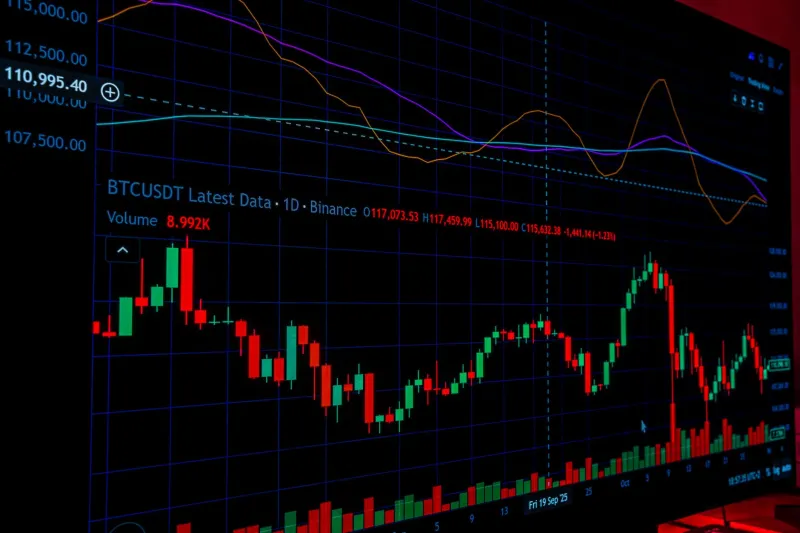
Structure Before Strategy: How to Build a Multi-Account Crypto Portfolio That Actually Works in 2024

Structure Before Strategy: How to Build a Multi-Account Crypto Portfolio That Actually Works in 2024

Seasoned US crypto investors increasingly rely on segmented portfolio structures — using separate accounts and organizational aliases to manage distinct financial goals, risk tolerances, and time horizons. Whether you are accumulating long-term wealth or actively trading short-term volatility, building the right framework from the start can mean the difference between disciplined growth and costly confusion. Here is how to do it correctly.